
How to Search Criminal Dockets
The fastest route runs through the Kansas District Court Public Access Portal. Register first, clear the CAPTCHA, and set the filter to Marion County. A full case number is the best search term. Party, attorney, judicial-officer, and citation filters can narrow things too. Eligible public case information comes back in the results. Events, attorneys, the judge, and some public documents appear there as well.
- Decide whether the matter is a district case or city ordinance case.
- Search the Kansas portal by full number or a limited party search.
- Check the Eighth District Marion PDF for the next hearing.
- Use the courthouse terminal for eligible records or older converted documents missing online.
- Call, visit, or write Clerk Jan Helmer for a recent change or specific copy.
The clerk's office sits at 200 South Third Street, Suite 201, Marion, Kansas 66861. Phone 620-382-2104. A precise written request under the Kansas Open Records Act is another option. Ordinance cases filed by a city stay with that city's court. They do not go to the district clerk.
MN-YYYY-CR Search Keys
Every Marion County criminal case number carries a county marker, a year, and a case family, like MN-2026-CR-000029. The `CR` tag marks district criminal files. That one letter separates them from `TR` traffic matters and from municipal cases. Search by the number whenever you can. A caption spelling or a vague note is far less reliable.
MN Marion County location marker.
CR District criminal case family.
TR District traffic family.
An empty result does not mean nothing is happening. Before assuming a case does not exist, check the county filter, the number format, any access limits, and whether a city court owns the file.
What a Criminal Docket Shows
Two different tools, two different jobs. The Marion calendar looks forward to upcoming settings, while the Kansas events index lists eligible past activity and documents. Neither one adds up to a full criminal-history report.
| Case number | Marion identifier and CR family. |
|---|---|
| Date and time | Published setting, subject to change. |
| Judge | Judicial officer for the event. |
| Setting | Arraignment, preliminary hearing, pretrial, sentencing, probation matter, or another stage. |
| Events | Eligible indexed activity and public documents. |
Do not expect the calendar to spell out every count, statute, bond term, sentence, or ruling. For those details, the complaint, the information, a journal entry, or a signed order is the stronger source.
Marion Settings Are Not Outcomes
A calendar line records a schedule, not a result. An arraignment listing proves the hearing was set, not the plea entered. "Jury Trial Status" does not mean jurors were seated. "Probation Violation/Disposition" does not establish a violation finding or any sanction. A reset is just a new date. It is never a dismissal. Confirm each setting against the event index and the controlling document.
Recent change: Call 620-382-2104 when a Marion County criminal setting appears stale. The Eighth District says its PDF is a reference calendar and may lag.
When asking the clerk for a filing, give the case number, the document name, and its date. That turns a vague request into a defined public record the office can locate.
Stages on a Criminal Docket
A criminal docket does not follow one fixed script. Cases can start with a complaint, a citation, an information, or another charging paper. From there the court may schedule an appearance, a bond matter, a preliminary hearing, or an arraignment. No case has to hit every listed step.
Before anything resolves, expect motions, discovery, diversion talks, and conferences. The ending may be a plea. It could be a dismissal, a trial, or some other disposition. Afterward comes sentencing, restitution, probation, an appeal, or postjudgment activity. Filed documents back up historical claims far better than calendar labels do.
FY2025 Marion Dispositions
The Kansas Judicial Branch report for the year ending June 30, 2025 counts 83 Marion felony dispositions and 67 misdemeanor dispositions. Those are completed cases in the aggregate. They are not pending matters, unique people, or a docket list.
The felony column breaks down as 63 guilty pleas and 17 dismissals. It also shows one deferred adjudication or diversion and two other outcomes. Misdemeanors show 27 guilty pleas and 22 dismissals. They add ten deferred adjudications or diversions and eight other dispositions. Court and jury trials came in at zero for both. These figures describe a whole year in Marion County. Do not turn them into a conviction rate or apply them to any one person.
Which Court Holds Criminal Dockets
County-filed state criminal records live with the Marion County District Court. The court belongs to the Eighth Judicial District and works through its unified clerk. District Judge Susan C. Robson serves Marion. A district magistrate can take an assigned eligible proceeding when needed. The public material does not name a magistrate for every future case. Treat assignments as they come.
| Route | Scope |
|---|---|
| District Court | State CR cases and assigned proceedings. |
| Municipal Court | That city’s ordinance and traffic matters. |
| Federal court | Separate federal cases searched in PACER. |
In everyday speech, a district CR case, a district TR case, and a city prosecution can sound identical. Each one has a different custodian, and that difference decides where you request the docket.
Public Search Versus eFlex
eFlex belongs to attorneys and authorized filers, not to public docket reading. The official eFlex portal makes that split clear on its own pages.
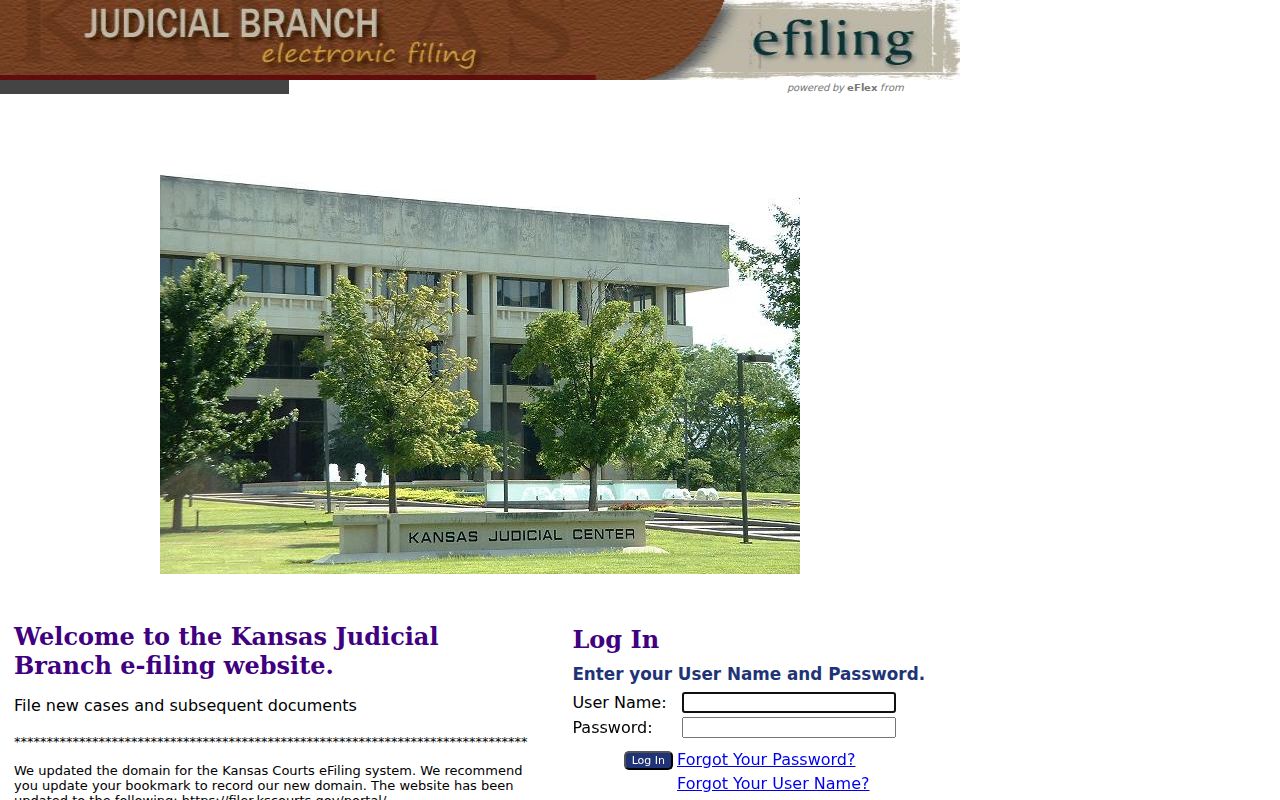
For public research, stick with Kansas Case Search, the Marion calendar, or the courthouse terminal. The Central Payment Center is a separate system altogether.
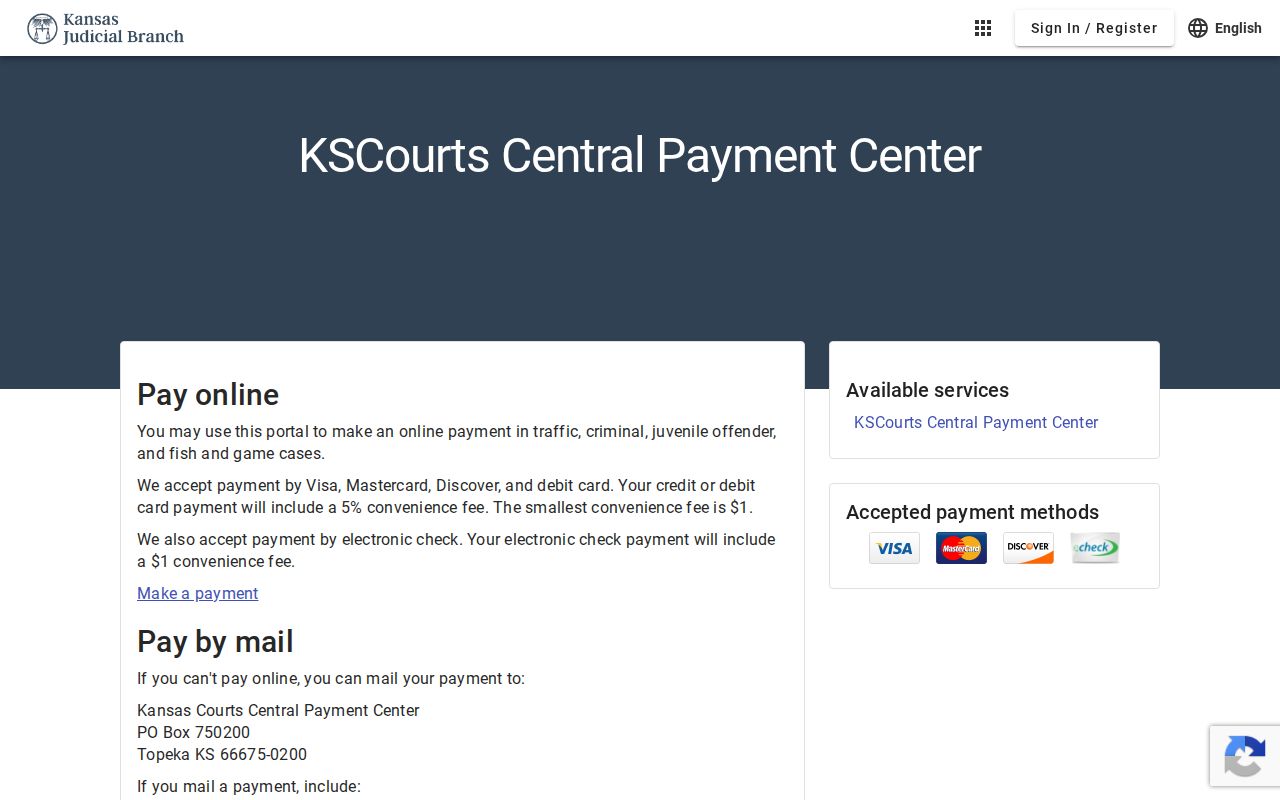
A payment screen is not the full criminal docket. Its search form covers citation, case, name, business, and vehicle fields.
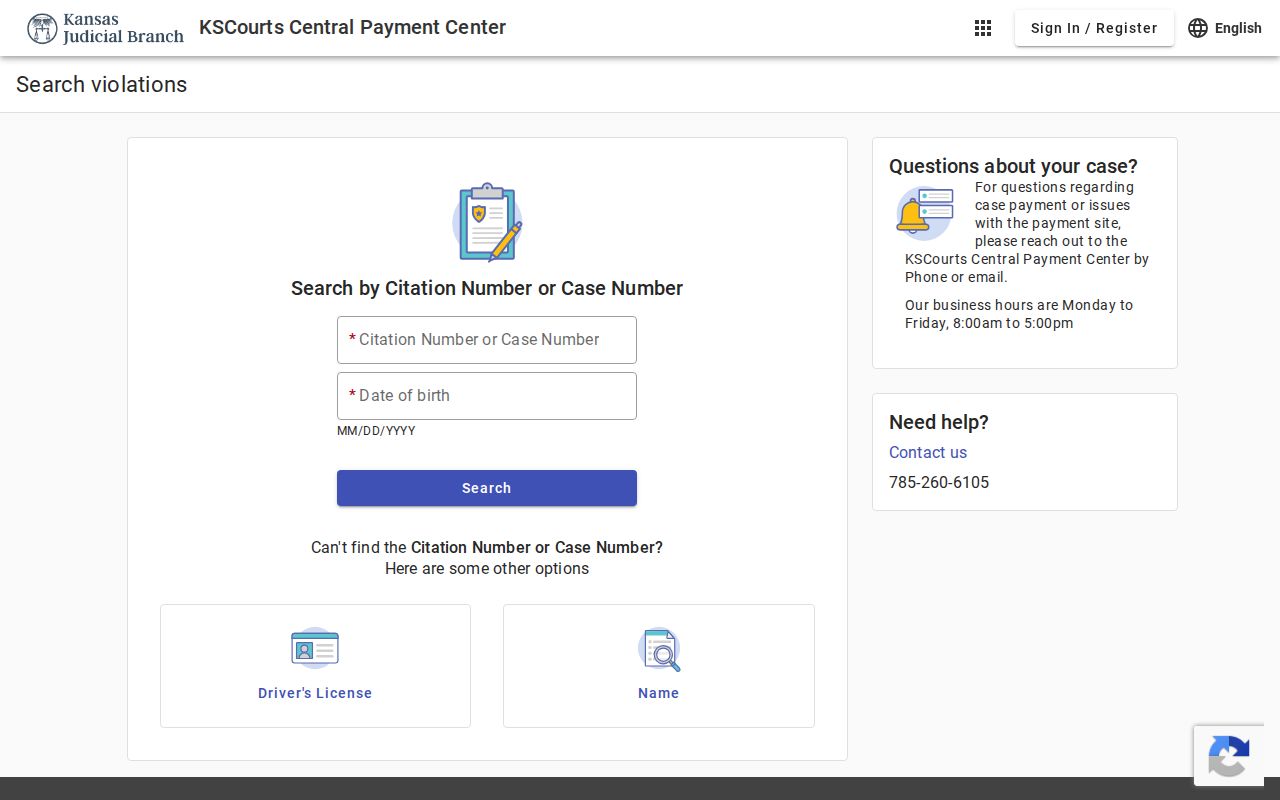
Search with the fewest reliable fields, and never republish sensitive identifiers. A Marion remote-hearing link also appears in the manifest.
A meeting link alone proves nothing about whether any named proceeding is open to remote public viewing.
Marion Recovery Court Boundaries
The Eighth District Recovery Court is a supervised, team-based program. It serves select chemically dependent, nonviolent drug offenders. Its public description covers treatment, incentives, and sanctions. It lists no participants and gives no Marion enrollment count. An underlying public case can still show visible events while treatment details stay private. So do not read admission or progress into an unclear docket note.
Public Access and Sealed Criminal Dockets
Kansas Supreme Court Rule 22 draws the line between public portal and courthouse-terminal access on one side and restricted material on the other. Sealed and expunged records, adoption files, many juvenile and child-in-need-of-care records, and other protected categories may be excluded. Knowing the case number does not lift the restriction.
Access boundary: K.S.A. 38-2309 governs juvenile-offender records, and K.S.A. 21-6614 addresses expungement. A no-result search can be correct.
When eligible material is not online, use the courthouse terminal or request the exact complaint, journal entry, judgment, or order. Recordings and transcripts go through the Eighth District's separate request process.
Marion Criminal Record Fallbacks
Some Marion County records never make it to a screen. Conversion gaps and remote document limits leave filings that a portal indexes but never shows. Ask the clerk whether an eligible document can be inspected, supplied as a plain copy, or certified. Confirm the current charge before ordering anything.
Municipal ordinance matters follow a different channel. Contact the city that filed the charge. Marion Municipal Court publishes 620-382-3703, and Hillsboro publishes 620-947-3162. Goessel, Peabody, and Florence offer clerk fallback numbers. First pin down whether the file is municipal or a state prosecution. These numbers help, but they do not prove every city uses identical labels or posts a docket online.
Hearing recordings go through the Eighth District listening form. It asks for county, caption, number, hearing date and time, judge, courtroom, reason, signature, and the judicial decision. A GECO note means the proceeding was recorded. It is not a public download button. District transcriptionists handle cost estimates separately.
Documenting an entry takes a few habits. Keep the full case number, the search date, the source, and the exact displayed label. Calendars change, portal entries get corrected, and later orders can replace earlier settings. Neutral phrasing helps. Say "the calendar listed" a stage rather than treating a scheduled hearing as a reported outcome.
Want the charge, bond, or sentence itself? Get the public charging paper or the signed order. A calendar entry may omit statutes, counts, classifications, bond terms, or the sentence imposed. A bond appearance only shows the topic was set. A sentencing row does not reveal what the sentence was.
Marion County joined Odyssey on August 5, 2019. That cutoff matters. It does not guarantee every later document is online or that older pages were scanned. Ask the clerk whether eligible pre-transition material sits on the terminal, on paper, or on microfilm. It may also be available to copy.
A written request should name Marion County District Court and the case number. Include the exact complaint, order, judgment, or journal entry, plus the date and how you want it delivered. Say whether you need a plain or certified copy. The clerk can review an existing record without being asked to build a broad compilation.
The party and attorney columns on a Marion calendar help confirm you found the right numbered case. Still, keep sensitive details out of any public notes. Dates of birth, driver-license numbers, and similar search values should not be retained. Case number, court, event, and access date give a sound trail.
A recent continuance deserves a second check. The Eighth District tries to update its docket publication twice each week. Yet a signed reset can be newer than the PDF. Call the clerk for the current date. Do this when travel, an interpreter, or a remote appearance turns on the answer. The court's notice and order control over a cached calendar.
Undefined abbreviations call for the same care. Notes like FTA, RSTM, and PS/RS appear on Marion dockets, and no official local codebook explains every one. Preserve the displayed text, open the linked event or order, and ask the clerk if a code stays unclear. Expanding an unknown abbreviation using another county's shorthand risks changing its meaning.
Keep district criminal, district traffic, and municipal ordinance records separate even when the conduct sounds similar. The district portal's `CR` family is not a catchall for every alleged offense in Marion County. Correct routing is the first accuracy check. It also explains why a careful name search sometimes returns no district result at all.